
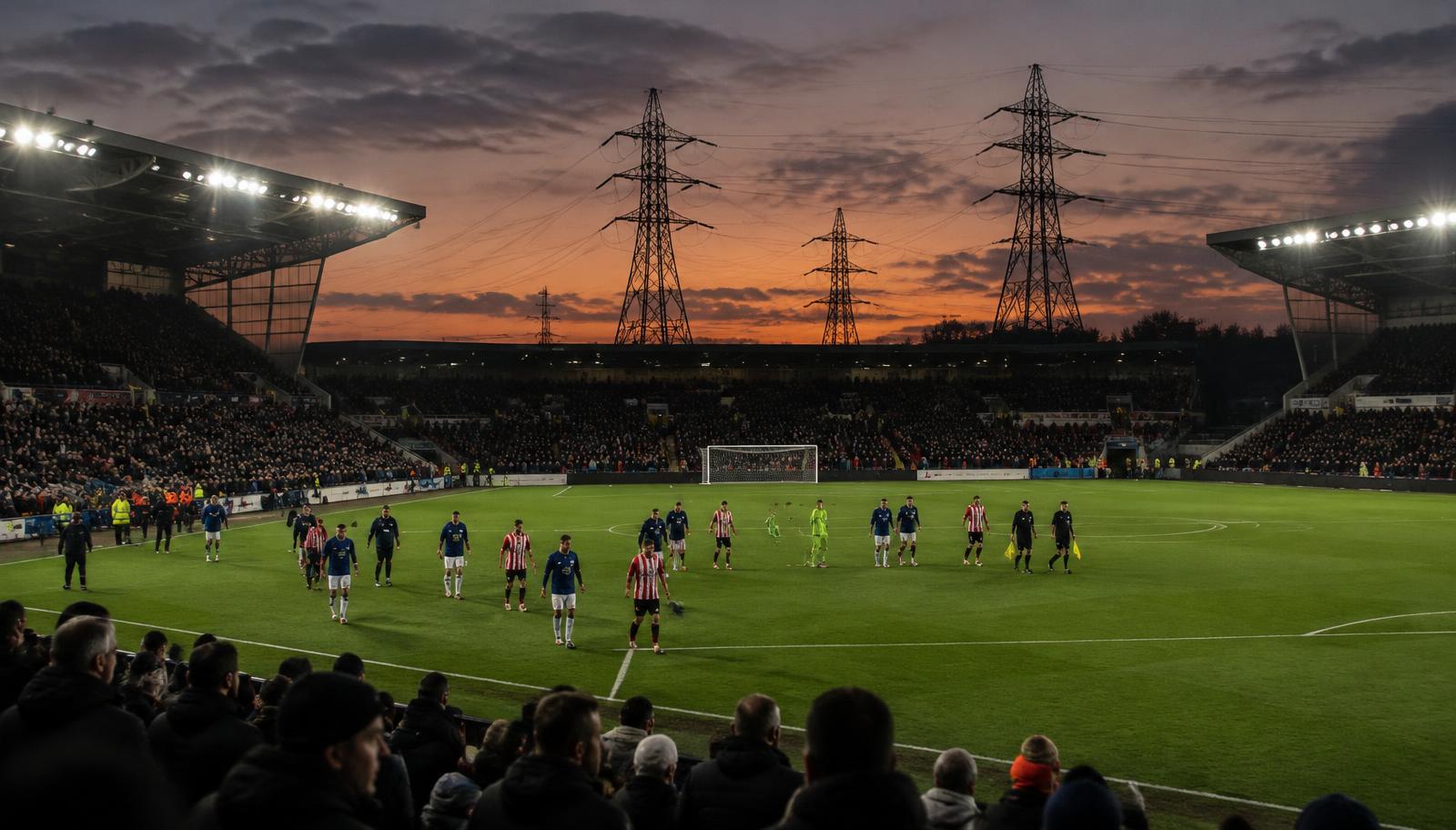
How millions of people, one whistle and a cup of tea can challenge an entire electricity system.
Imagine millions of people across the United Kingdom watching the same football match. The atmosphere is intense. The referee blows the whistle. Half-time.
Within seconds, millions of people get up from their sofas. Some switch on their kettles. Others open their refrigerators, prepare food, turn on kitchen appliances or use other electrical devices.
Individually, these actions seem insignificant. But when they happen simultaneously across an entire country, something remarkable happens: electricity demand suddenly increases.
This phenomenon has a name in the energy industry: The TV Pickup Effect.
1. When Millions of People Act at the Same Time

Electricity consumption normally follows relatively predictable daily patterns. However, major sporting events and popular television programmes can create unusual demand patterns.
Football matches are a particularly interesting example. During half-time, millions of viewers take a break simultaneously. Their collective behaviour creates a sudden increase in electricity consumption.
The same phenomenon can happen:
- During half-time of major football matches.
- Immediately after a dramatic final whistle.
- During commercial breaks in popular television programmes.
- Following major national events watched by millions.
What makes this interesting is not simply the amount of electricity consumed, but how quickly demand changes.
2. Britain's 2,800 MW Electricity Demand Record
One of the most remarkable examples happened on 4 July 1990. England faced West Germany in the FIFA World Cup semi-final. After England lost in the penalty shootout, millions of viewers simultaneously returned to their everyday activities.
The result? A sudden 2,800 MW increase in electricity demand. According to National Grid, this was equivalent to switching on more than one million electric kettles.
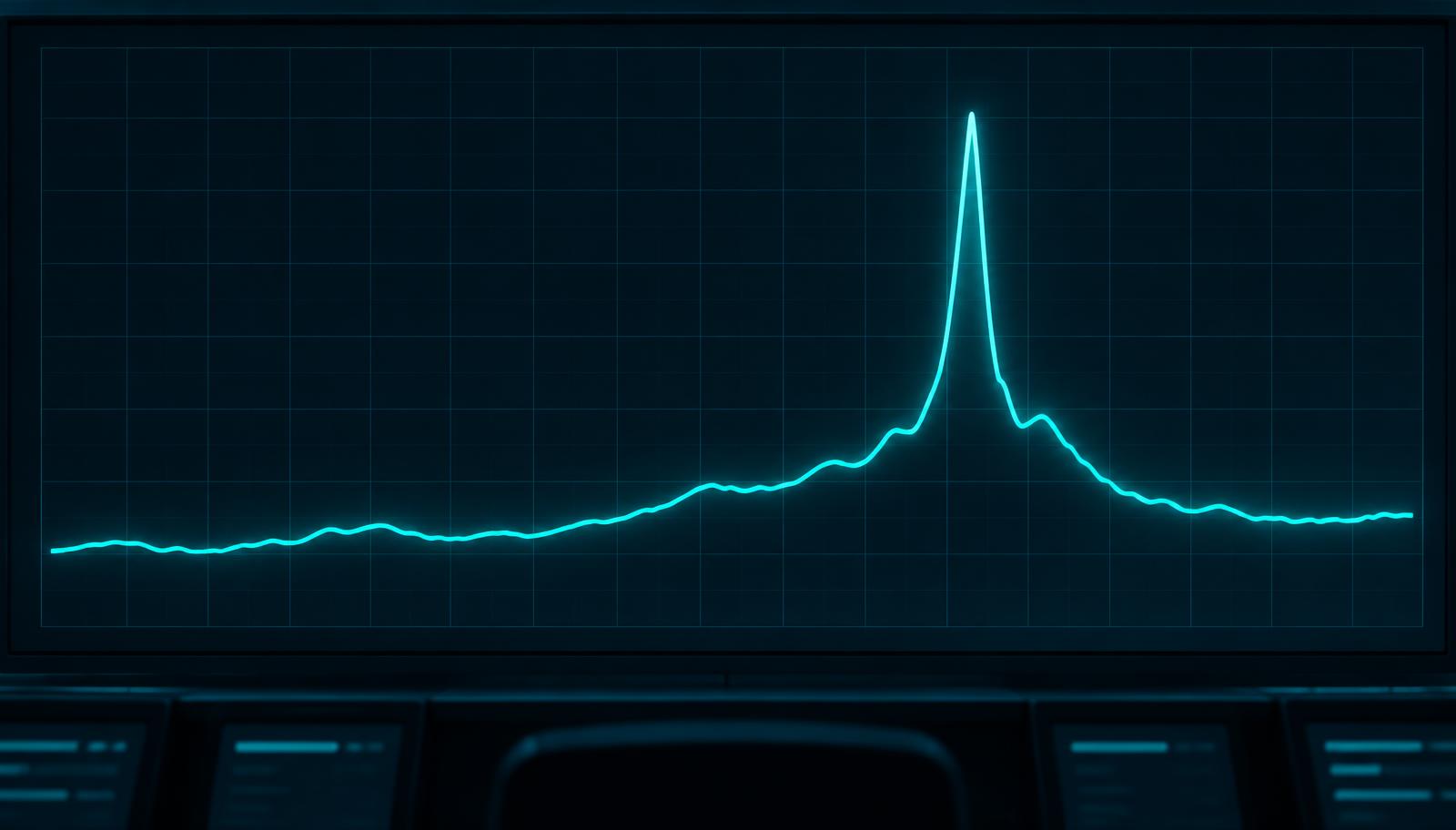
Other major events have produced similar effects:
| Event | Recorded demand increase |
|---|---|
| 1990 England vs Germany | 2,800 MW |
| 2019 Rugby World Cup Final | 1,350 MW |
| 2020 England vs Denmark | 1,400 MW |
| 2024 EURO semi-final: England vs Netherlands | Approximately 1,000 MW |
These figures demonstrate how collective human behaviour can influence a country's electricity system.
3. Why Is This a Challenge for the Electricity Grid?
Electricity systems must continuously balance generation and consumption. Unlike many other commodities, electricity cannot simply be stored in unlimited quantities whenever it is produced. At every moment, system operators need to ensure that electricity generation matches demand.
A sudden increase in consumption creates several operational challenges:
Generation forecasting
Operators need to anticipate when demand will increase and estimate how much additional electricity will be required.
Real-time balancing
Additional generation or other balancing resources may need to be activated quickly.
Grid stability
The electricity system must maintain its operating frequency around 50 Hz.
Market optimisation
Unexpected changes in demand can influence balancing requirements, electricity prices and the value of flexible generation.
The important point is that the grid must be prepared before millions of people switch on their appliances.
4. How Does Britain's Electricity System Respond?
The National Energy System Operator (NESO) continuously monitors electricity supply and demand. To manage sudden demand changes, it uses several mechanisms:
- Demand forecasting based on historical consumption and expected consumer behaviour.
- Reserve generation that can be activated when additional electricity is required.
- The Balancing Mechanism, which allows the system operator to adjust generation and consumption in real time.
- Interconnectors that enable electricity imports and exports.
- Flexible resources such as battery storage and pumped-storage hydropower.
These resources help maintain the balance between electricity generation and consumption. Modern electricity systems increasingly depend on accurate forecasting, digital monitoring and flexible energy assets.
5. What Does This Mean for the Future of Energy?
The half-time effect is a simple example of a much bigger transformation. Electricity demand is becoming increasingly dynamic.
Electric vehicles, heat pumps, battery storage, distributed solar generation and smart buildings are changing when and how electricity is consumed. At the same time, renewable generation introduces another variable: weather-dependent production.
A solar plant may produce less electricity when clouds arrive. Wind generation may increase or decrease depending on weather conditions. Meanwhile, electricity consumption continues to change throughout the day.
This creates a more complex energy ecosystem in which three capabilities become increasingly important:
- Monitoring: Understanding what is happening across generation assets and consumption points.
- Forecasting: Predicting future generation, consumption and market conditions.
- Optimisation: Making better operational and commercial decisions using real-time information.
6. How WorkyBe Approaches This Challenge
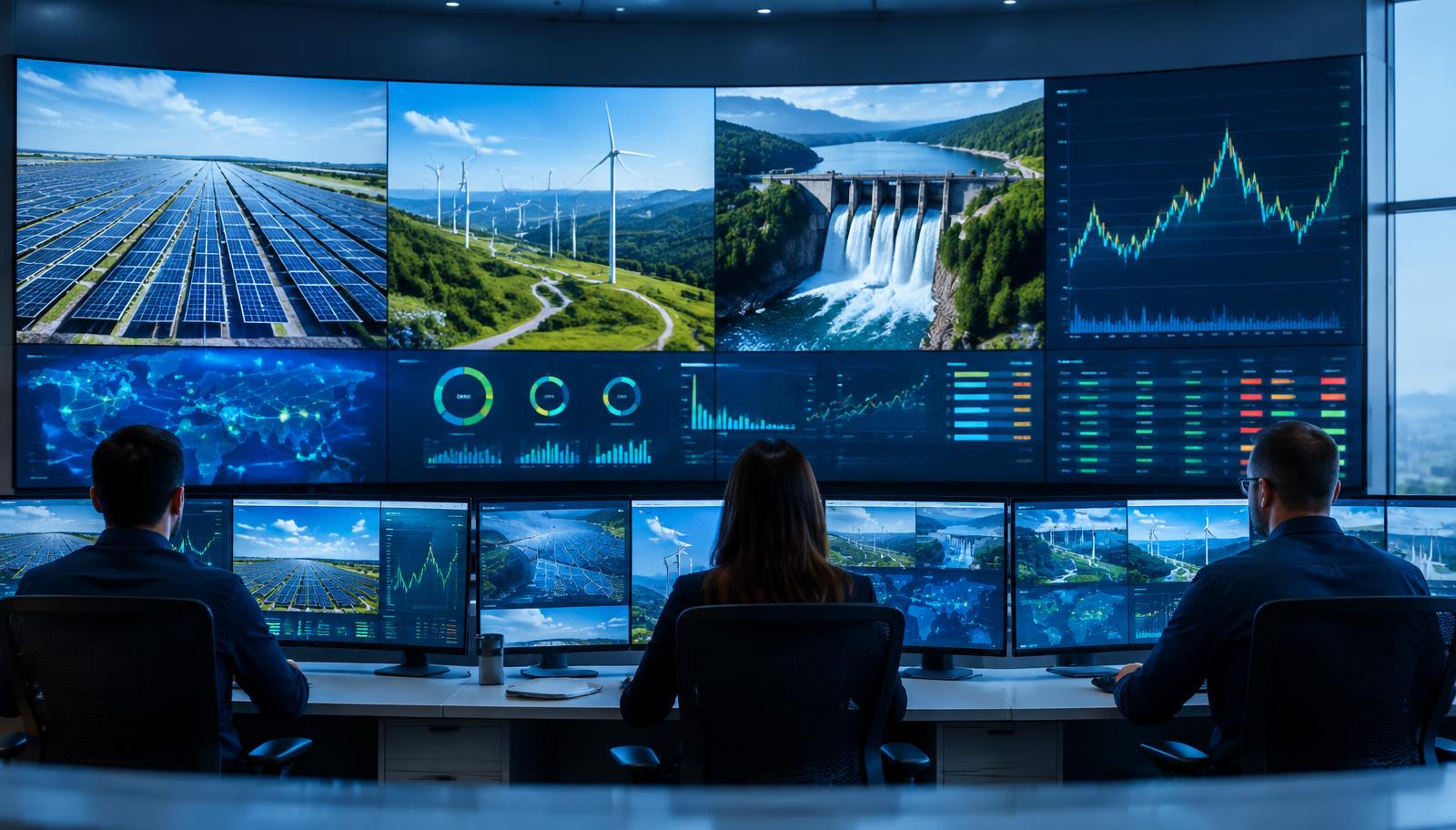
At WorkyBe, we believe that the future of energy management depends on connecting data, forecasting and operational intelligence. Our technology ecosystem is designed to help energy businesses and asset operators manage increasingly complex energy environments.
With solutions such as WorkyPower and WorkyTrade, we focus on different but interconnected parts of this transformation.
WorkyPower: Generation Intelligence
- Real-time monitoring of renewable energy plants.
- Multi-site generation management.
- AI-powered generation forecasting.
- Performance monitoring and anomaly detection.
- Operational insights across solar, wind, hydro and other generation technologies.
WorkyTrade: Energy Trading Intelligence
- Electricity market monitoring.
- Price forecasting and market analysis.
- Trading automation.
- Portfolio and position management.
- Better-informed energy trading decisions.
The objective is to transform fragmented energy data into actionable intelligence. Because the energy challenge is no longer just about producing enough electricity. It is about knowing how much electricity will be needed, when it will be needed, where it will be needed and how the available resources can respond.
Conclusion: The Next Energy Challenge Is Predictability
A football referee's whistle lasts only a moment. But the electricity demand response it triggers can challenge the operational planning of an entire national energy system.
The same principle applies to the future of electricity. As millions of devices, buildings, vehicles and renewable energy assets become interconnected, the ability to monitor, forecast and optimise energy flows will become increasingly valuable.
The future of energy is not just about generating more electricity. It is about managing energy intelligently, every second of the day.
WorkyBe: Powering the Intelligence Behind Energy.
Frequently Asked Questions
What is the TV Pickup Effect?
It is the sudden rise in electricity demand when millions of viewers act at the same moment, for example switching on kettles at half-time of a major football match.
What was the largest recorded TV pickup in Britain?
On 4 July 1990, after England lost the World Cup semi-final to West Germany on penalties, demand rose by 2,800 MW, which National Grid compared to more than one million kettles switching on.
How does the grid cope with these spikes?
NESO uses demand forecasting, reserve generation, the Balancing Mechanism, interconnectors and flexible resources such as battery storage and pumped-storage hydropower.