
In industrial facilities, power plants, and infrastructure projects spread across wide geographies, the biggest risk factor has always been "information disconnection." The time it takes for a malfunction or a loss in energy efficiency noticed by a technician in the field to reach the headquarters usually results in increased costs and downtime. These processes, traditionally managed with paper forms, phone traffic, and Excel files, are no longer sufficient in today's rapidly changing energy markets. For businesses in Turkey complying with EPDK (Energy Market Regulatory Authority) regulations and targeting ISO 50001 standards, the speed of data coming from the field is not just an operational advantage, but a strategic necessity.
Breaking Down the Walls Between Field and Office
In modern energy management, the office is the hub where data is analyzed and decisions are made, while the field is the source of this data. However, in most enterprises, there is a serious synchronization problem between these two ends. Field teams can only enter their maintenance and repair activities into the system at the end of the shift. This delay causes decision-makers to act on "old data" throughout the day.
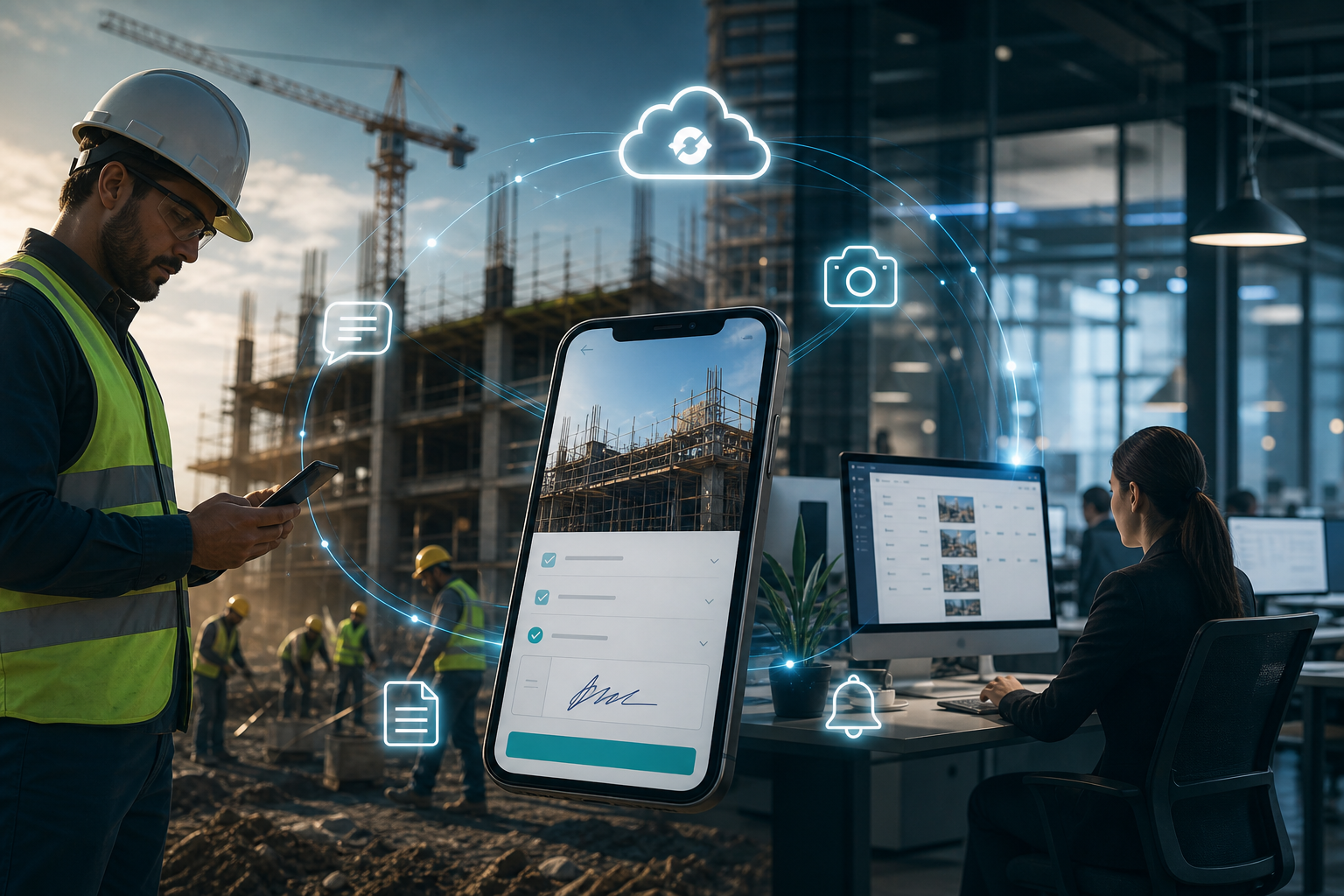
Mobile applications turn these walls into transparent glass. Thanks to the mobile integration provided by platforms like WorkyBe, an engineer or technician in the field logs the situation into the system instantly. This means not just a data entry, but the simultaneous update of the entire ecosystem.
The Operational Transformation Power of Mobile Applications
1. Zero Delay with Instant Notifications
Seconds matter when a voltage fluctuation occurs on a critical energy line or a compressor fails. Push notifications sent via the mobile app land instantly on the relevant technical staff's smartphone or tablet. This prevents important alerts from getting lost in email traffic. Shortening response times minimizes production loss.
2. Offline Working Mode: Uninterrupted Recording Even Without Internet
Digitalization often falters in areas where GSM signals are weak, such as hydroelectric power plants, wind turbines, or factory basements. Advanced mobile solutions offer offline working capabilities. Personnel enter data, upload photos, and sign off. As soon as the device connects to the internet, all data is automatically synchronized with cloud servers. This prevents data loss 100%.
3. Multimedia Evidence: Photo and Signature Collection
Describing a fault in words is difficult, but a photo tells the whole story. Fault photos taken via mobile apps, notes added to them, and the approval of completed tasks with digital signatures provide indisputable evidence for Internal Audit processes. Especially for CBAM (Carbon Border Adjustment Mechanism) and CSRD (Corporate Sustainability Reporting Directive) reporting, such on-site evidence is critical for verifying data accuracy.
Example Scenario: Productivity Increase Analysis
Suppose a textile factory averages 200 unplanned maintenance activities per month. While reporting, assigning, and documenting each maintenance task takes a total of 45 minutes using traditional methods, this time drops to 10 minutes with the WorkyBe mobile app.
- Old Method: 200 tasks x 45 min = 9,000 minutes (150 hours)
- Mobile Method: 200 tasks x 10 min = 2,000 minutes (33.3 hours)
- Gain: 116.7 hours of labor savings per month.
These savings allow technical staff to focus on preventive maintenance activities instead of reporting faults, potentially increasing overall equipment effectiveness (OEE) by 15%.
Energy Regulations and Carbon Footprint
For energy-intensive sectors in Turkey, EPİAŞ (Energy Exchange Istanbul) and ETS (Emission Trading System) processes are on the horizon. Instant tracking of energy consumption data or leaks in the field via mobile apps ensures that carbon footprint calculations are made accurately. Eliminating paper forms directly contributes to the sustainability goals of the business, saving thousands of pages of paper annually.
Why Choose WorkyBe?
WorkyBe is not just a messaging tool; it is a full-scale asset and energy management ecosystem. Field personnel can access historical maintenance records of devices, check spare parts stock status, and fill out occupational health and safety (OHS) forms digitally via the mobile app. Managers in the office can monitor this data flowing from the field live on KPI dashboards.
Frequently Asked Questions
Will field staff have difficulty using the mobile app?
WorkyBe's interface is designed with a focus on user experience (UX) so that technical personnel can do the most work with the fewest clicks. Ease of use is provided through icons and prompts instead of complex menus.
What reports can I get through the mobile app?
You can generate many operational reports such as failure response times, personnel performance analysis, device-based energy consumption trends, and completion rates with a single click.
How is data security ensured?
All data is encrypted end-to-end and stored on KVKK (Personal Data Protection Law) compliant servers. Thanks to user-based authorization, each staff member can only access data related to their own area of responsibility.
Conclusion
Mobile applications are not a "luxury" in field operations but the cornerstone of digital transformation. Connecting field teams with the office instantly reduces errors, lowers costs, and increases energy efficiency. To take your place in the smart factories of the future, start listening to the voice from the field with WorkyBe.